Editorial Disclosure: Independent editorial — Ali visited the SWING Foundation and spoke with sex workers and community leaders during her time in Thailand.
THE THAILAND SERIES
Part 1 — Sexual Attitudes & Culture
Part 2 of 4 — Inside the Industry
Part 3 — Sex Education, Therapy & What Couples Are Struggling With
Part 4 — Passport Bros, Foreign Men & The Dating Culture Debate
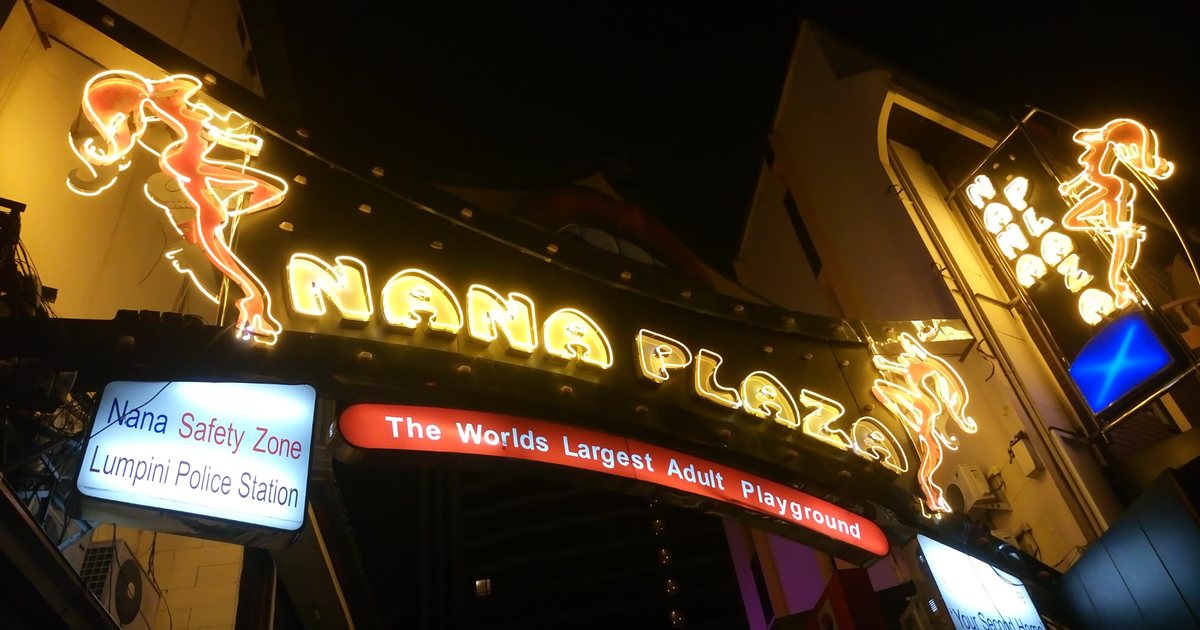
Sex work in Thailand is probably one of the most talked about and most misunderstood industries in the world.
Depending on who you ask, you'll hear completely different stories. Some will tell you it's exploitation. Others will tell you it's pure opportunity. The truth — and I want to be upfront about this — is that it's not just one story. It's many, happening simultaneously, in the same system, under very different circumstances.
I am not an expert in this industry. My opinions on this topic change almost daily depending on who I talk to and what new information I uncover. What I can offer is what I've observed, the conversations I've had with people actually living it, and the research I've read. I'm sharing it all honestly, without pretending to have answers that nobody actually has.
How Big Is This Industry, Really?
The numbers are staggering.
While sex work is technically illegal in Thailand, the sex industry generates an estimated $6.4 billion annually — roughly 2 to 3% of Thailand's entire GDP. The direct workforce is estimated at 200,000 to 300,000 sex workers, and when you include the broader ecosystem — bars, massage parlors, managers, transportation, support staff — the number can reach 450,000 people.
This isn't an underground operation. It's an economic system.
To understand how it got this large, you need to go back to the 1960s and 70s. During the Vietnam War, US military personnel began using Thailand — particularly Pattaya — for R&R (rest and relaxation). Thousands of soldiers with money to spend collided with a large population of deeply impoverished rural families who desperately needed to survive. That intersection of foreign money and local poverty sparked an explosion in sex tourism that permanently shaped the country's economy. The war ended. The industry didn't.
Why People Enter — The Real Answer
This is where most people get it wrong.
Today, a significant portion of women working in the industry migrate from Isan — Thailand's northeastern region, which holds a third of the country's population and has its highest poverty rate. For many of them, the alternatives aren't better. They're often worse.
The comparison is rarely between sex work and a comfortable middle-class career. It's between sex work and factory labor with poverty wages and grueling hours, or agricultural work with unstable income and physical danger. Research has consistently found that in Thailand, factory and farm work can be more dangerous and more exploitative than sex work — just less visible.
When you understand that context, the question "why would someone choose this?" has a very practical answer: it often means more money, more flexibility, and the ability to financially support extended family back home — a tradition that remains deeply important across much of Asia.
During my time in Pattaya, I sat down with a sex worker who told me she averages around $400 USD a day. Her specific goal was to leave the industry, move to the islands, and open a restaurant. She was well on her way. This outcome — work for a few years, save aggressively, leave the industry, start a business — is more common than it gets credit for in Western media coverage.
I want to be clear: I'm not romanticizing this. Not everyone's story looks like this. Many people are surviving rather than thriving. But the version where every sex worker in Thailand is a helpless victim is not accurate — and it strips real people of their agency, intelligence, and the very real decisions they're making with the options available to them.
The Crucial Distinction: Sex Work vs. Trafficking
Before the comment section explodes — let's address this directly.
Thailand legally separates these two things, and for very good reason.
Sex work is technically illegal under the 1996 Prevention and Suppression of Prostitution Act but is widely tolerated in practice.
Human trafficking is a severe crime under the 2008 Anti-Human Trafficking Act — carrying serious criminal penalties.
The key difference comes down to one word: consent.
If someone is forced, coerced, underage, or controlled — that is trafficking. That is a horrific human rights violation and there is no nuance to add. It is simply wrong.
If an adult is choosing to sell sex among available options — that is a fundamentally different situation, even if those options are constrained by poverty.
When we blur this line, we harm both groups. Treating all sex workers as trafficking victims removes their agency and makes it harder for them to access the legal protections and health services they need. It also dilutes attention and resources away from actual trafficking situations where people genuinely need rescue and intervention.
A 2012 report from the Empower Foundation — a sex workers' rights organization in Thailand — found something that should make anyone pause: more women in Thailand's sex industry have been harmed by anti-trafficking interventions than by traffickers themselves. Rescue operations that remove workers from jobs they chose, without their consent, in order to "protect" them — aren't protection. They're another form of control.
Trafficking does exist in Thailand, including involving minors, and that must be confronted seriously and directly. But studies show it has actually been declining over the years. The two phenomena — voluntary sex work and trafficking — coexist in the same industry but are not the same thing.
What I Found at the SWING Foundation
The most impressive organization I visited during my time in Thailand was SWING — Service Workers In Group — in Bangkok.
This is not a small operation. What makes SWING so effective is that it's built from inside the community — over 80% of their staff are current or former sex workers. They reach between 20,000 and 30,000 people every year. Services include HIV and STI testing, HIV care and prevention, PrEP (the daily pill that prevents HIV), education, language classes, and financial literacy programs.
When I walked in, there was a clinic on one side — private, stigma-free, and genuinely welcoming — and a pharmacy on the other. Everything looked well-run, well-resourced, and deeply respectful of the people using it. They treat sex workers as the smart, capable professionals they are.
One program that particularly struck me: since 2007, SWING has run an internship program with police cadets. Young officers spend time with sex workers — talking to them, learning about their lives, their rights, and the public health realities of their work. Because sex work is illegal in Thailand, there is a deep history of tension, raids, and mistreatment by law enforcement. This program tries to shift that dynamic from punishment to understanding. To bring humanity into a system that often lacks it.
It's one of the smartest harm reduction approaches I've seen anywhere in the world.
Health and Safety — What's Actually Happening
The public health infrastructure around sex work in Thailand is far more developed than most people outside the country realize.
Sexual health clinics are widespread, affordable, and easily accessible. Testing for HIV and STIs is available with no doctor's referral required — you can walk in, pay, get tested, and receive results via WhatsApp. PrEP is available, often free, through specialized clinics and NGOs.
SWING publishes its own clinical research, and the numbers from 2021-2023 are genuinely encouraging: the number of people coming in for first-time HIV testing almost doubled over three years. And while testing went up — positive results went down. In Bangkok, HIV positivity dropped from 8.5% to 7.3%. In Pattaya, it dropped from 9.6% to 2.3%.
That's not accidental. That's what education, access, and non-judgmental care actually does.
A note for travelers: If you are coming to Thailand and planning to have casual sex — with sex workers or with anyone else — you have a responsibility to your own health and to the health of the people you're with. Sexual health clinics are everywhere, discreet, and affordable. There is no excuse not to get tested, use protection, and be a responsible participant in this ecosystem.
What Thai Society Actually Thinks
Here's the paradox that consistently surprises visitors: despite the sheer scale and visibility of the sex industry, most Thai people are not comfortable with it.
Every time I asked locals what they thought about sex work, there was a long pause. Discomfort. A kind of practiced neutrality. The general sense I got: if it involves someone else's family, it's complicated but exists. If it involves your own daughter or sister — absolutely not acceptable. The industry is massive and economically central, but the people who work in it are still largely marginalized by the same society that sustains them.
The Part That's Hard to Sit With
The more time I spend understanding this industry — in Thailand and elsewhere — the harder it becomes to see it in black and white.
It's not just empowered or exploited. It's not just survival or strategy. It's all of those things simultaneously, in the same place, for different people.
Some research suggests around 20% of sex workers in Thailand may be in situations involving coercion or trafficking. That means roughly 80% are not — and that 80% still deserves our attention, our respect, and our commitment to creating conditions where their work is safer and their rights are protected.
The same system that gives one woman a path to her restaurant also traps another woman in conditions she didn't choose. Understanding that complexity — without simplifying it for the sake of a clean narrative — is the most honest thing any of us can do.
I'm still learning. I'm still listening. And I'll keep sharing what I find.
Want to support sex workers' rights in Thailand? The SWING Foundation accepts donations — swingthailand.org
💬 Is It Just Me?
Has learning more about the sex industry in Thailand — or anywhere — changed how you think about sex work? What shifted?
Submit anonymously → /is-it-just-me
The Details
📍 SWING Foundation, Bangkok: swingthailand.org
📍 Empower Foundation Thailand: empowerfoundation.net
Also in The World Issue:
- Part 1: The Most Sexually Confusing Country I've Ever Visited
- Part 3: What's Happening in the Bedroom — Sex Ed, Therapy & Thai Couples
- Part 4: Passport Bros, Foreign Men & The Uncomfortable Questions About Western Dating
About the Author
Ali Imperiale is a sex education student with the Sexual Health Alliance, a writer, and a traveler. She has visited 40+ countries and writes about sex, intimacy, and culture from wherever she currently is. The Nookie Nook is her shame-free, algorithm-free intimacy library.